Rule 01
Describe the outcome, not the control
Say what an action will allow or prevent, not just what the toggle is called.
Applied in this journey
‘Allow sensitive or adult content’ makes the on state explicit.
1 of 2
How I used research and content design to turn a high‑demand assisted journey into self-service.

Interviewers:

Presented by:
Tolu Akinyemi
Senior Content Designer
How I used research and content design to turn a high‑demand assisted journey into self-service.
Interviewers:
Presented by:
Tolu Akinyemi
Senior Content Designer
Context
Programme objective
Move high-volume customer tasks from assisted support into self-service across Three’s app and website.
My role
I led content design across selected journeys, from discovery and research synthesis through journey definition, prototyping, detailed interaction content and delivery.
Agile delivery
I worked in cross-functional teams with product managers, product and journey designers, researchers, engineers, analysts, and colleagues in legal, compliance and customer care.
Before the case study
Question 1/2
The answer
* Pre-pay customers were the least likely to have had their age verified already.
The real challenge
My approach
I treated the brief as a service-design problem. I mapped the complete customer journey and the system around it. Research, system behaviour and operational constraints shaped the content before I wrote individual screens.
Evidence-led UCD
Gathered customer, behavioural and support evidence.
Turned evidence into user needs, constraints and success criteria.
Mapped the journey and created interaction-content prototypes.
Tested findability, comprehension, trust and recovery.
Turned findings into journey and content changes.
Aligned with product, legal and engineering through implementation and QA.
Monitored customer behaviour and support demand to inform improvements.
Problem framing
User need
Manage a sensitive account setting privately and confidently.
Risk if unmet
Customers remain dependent on an embarrassing, less private assisted journey.
Business need
Move a high-volume request from assisted support into digital self-service.
Risk if unmet
Avoidable contact demand, higher service costs and greater pressure on advisers.
Compliance requirement
Keep adult content blocked by default until the account holder’s age has been verified.
Risk if unmet
Potential regulatory action, financial penalties and reputational damage.
Research
*Multiple rounds of unmoderated usability testing involving 20 participants.
Research evidence
What it changed
100% preferred a self-service route.
Remove unnecessary assisted contact from the main journey.
70% expected the assisted conversation to feel embarrassing.
Keep the task private, direct and matter-of-fact.
60% thought entering card details meant payment.
Explain the purpose of the card check before displaying the form.
75% of users asked when the change would take effect.
Confirm the system’s dependable processing time with engineering.
75% assumed the setting might also control Wi-Fi.
Explain that the filter applies only on Three’s mobile network.
Research insight
What this meant for the content
I needed to show that the filter covered more than pornography. Explaining its wider protective role helped reframe the feature and defuse some of the stigma created by its sexual association.
The filter also covered
Information architecture
I used tree testing to compare different routes and labels before deciding where the setting should live. The final location reflected customers’ mental model of controlling what a mobile number could access.
90%
of test participants found the setting on their first attempt during tree testing sessions.
The route avoided Three’s internal service structure and grouped the setting with other account controls.
Content strategy
Location
Where can I find the setting?
Action
What can I change?
Consequence
What happens when I change it?
Scope
Where does the protection apply?
Verification
Why do you need my card details?
Timing
When will the change take effect?
Recovery
What happens if something goes wrong?
This sequence kept supporting information close to the decision it affected instead of placing every explanation on the first screen.
Journey design
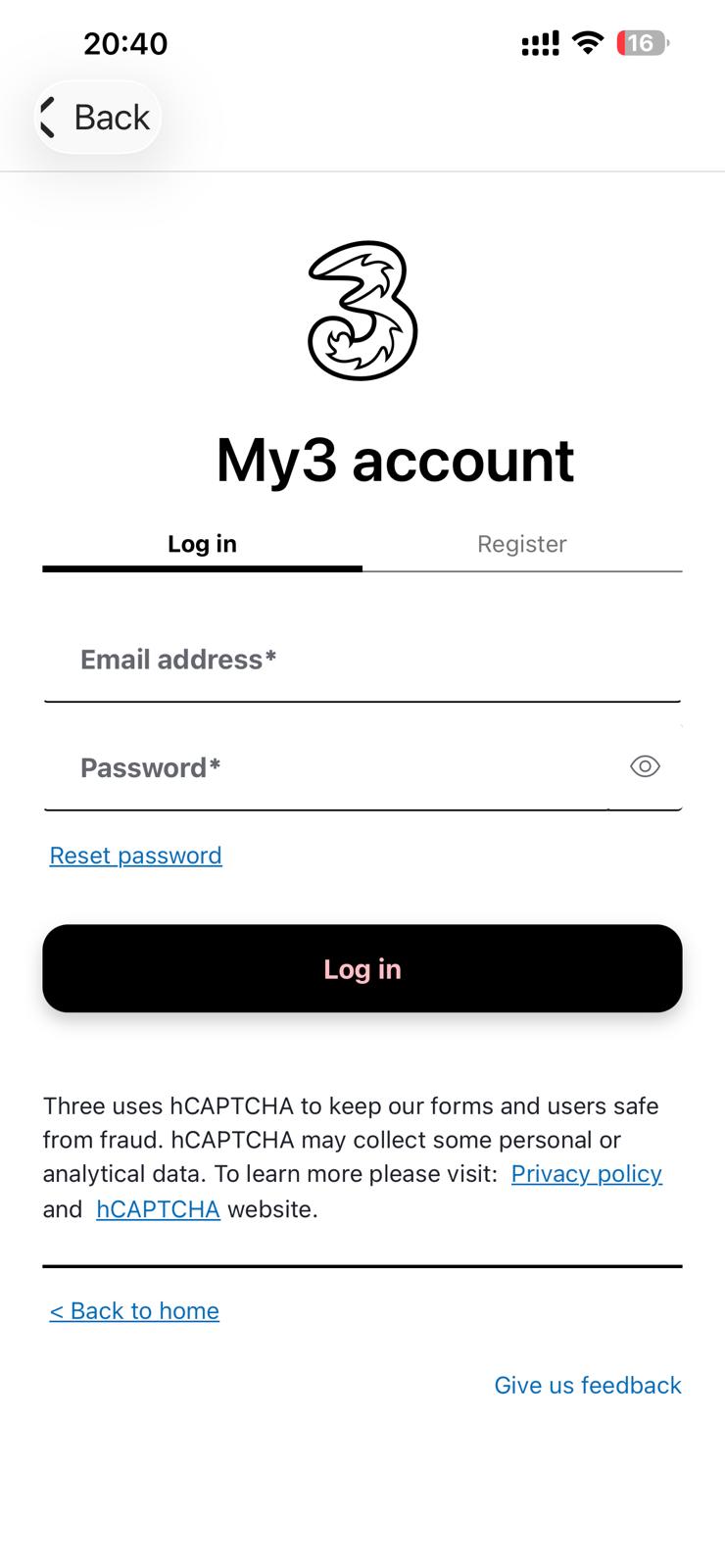
01 · Start the journey
Keep the journey inside the signed-in account so permissions and the relevant mobile number can be established.
1 of 8
What the work made reusable
Scalable outcome
I turned six recurring customer questions into a reusable content pattern, then applied it to other account-change journeys involving risk, verification or delayed processing.
Applied to other journeys
The reusable structure
What is the setting now?
What will the change do?
Where will it apply, and where will it not?
What must the customer prove?
How long can the change take?
What happened, and what can the customer do next?
Research-informed writing guidance
Testing showed where these established principles mattered in this journey. I made them explicit in our guidelines for future account-change flows.
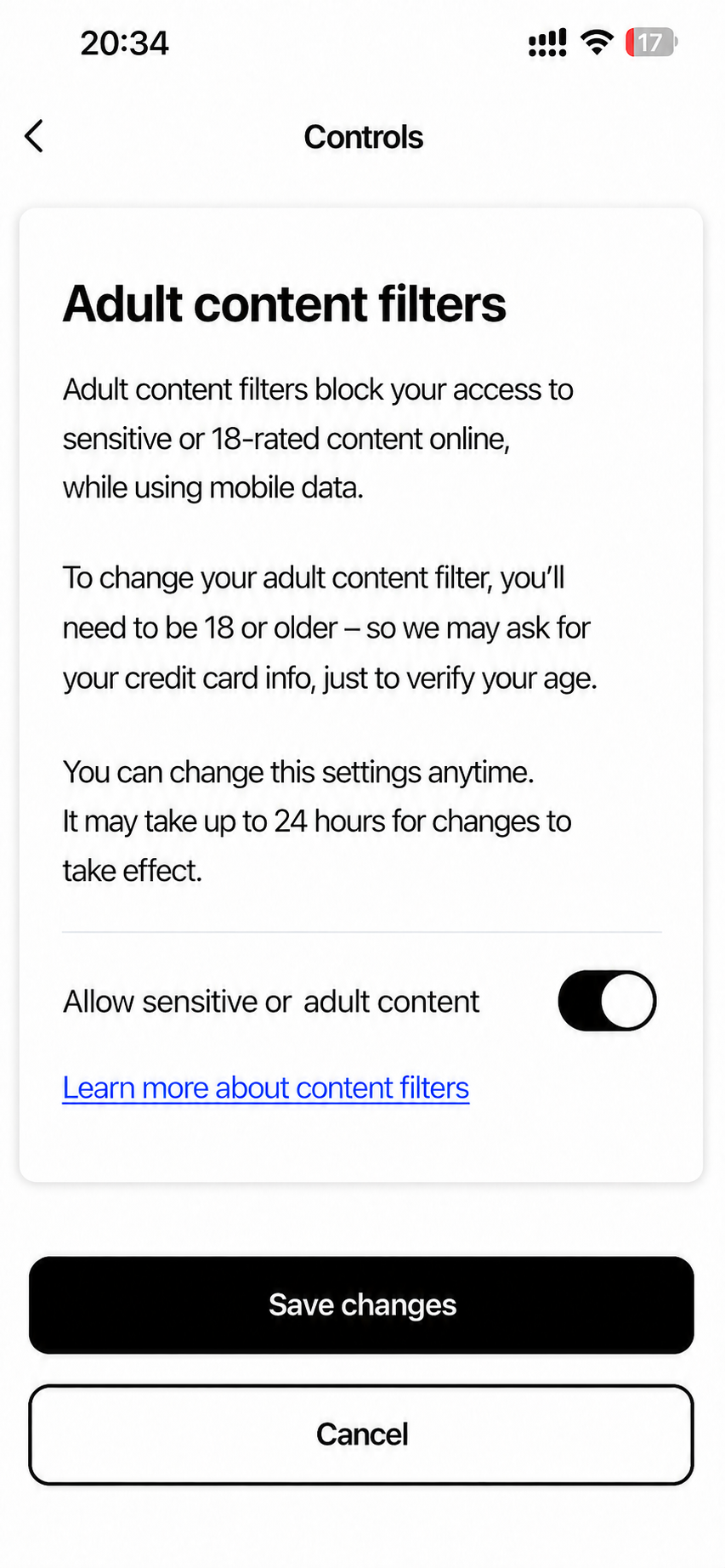
Rule 01
Say what an action will allow or prevent, not just what the toggle is called.
Applied in this journey
‘Allow sensitive or adult content’ makes the on state explicit.
1 of 2
Reflection
MVP compromise
Post-MVP recommendation
Further improvements
Result
Private self-service. Customers could change the setting without explaining a sensitive preference to an adviser.
Regulatory requirement preserved. The MVP had compromises, but adult content remained blocked by default until the customer’s age was verified.
Almost 100% reduction in related demand over three months. Measured by reduction in customer and contact centre requests.
The data indicated a strong contribution from self-service, but did not isolate every external factor.
Question 2/2